
“Security can’t be an afterthought. It has to be built in from day one.”
DevOps has transformed software delivery. By breaking down silos, automating repetitive tasks, and speeding up releases, DevOps helps teams deliver software reliably and at scale. But as development cycles have accelerated, one critical gap has emerged: security.
Traditionally, security checks came at the end of the process. By then, vulnerabilities could be deeply embedded, making them expensive and risky to fix. In today’s fast-moving software environment, waiting until the end is no longer an option.
What is DevSecOps?
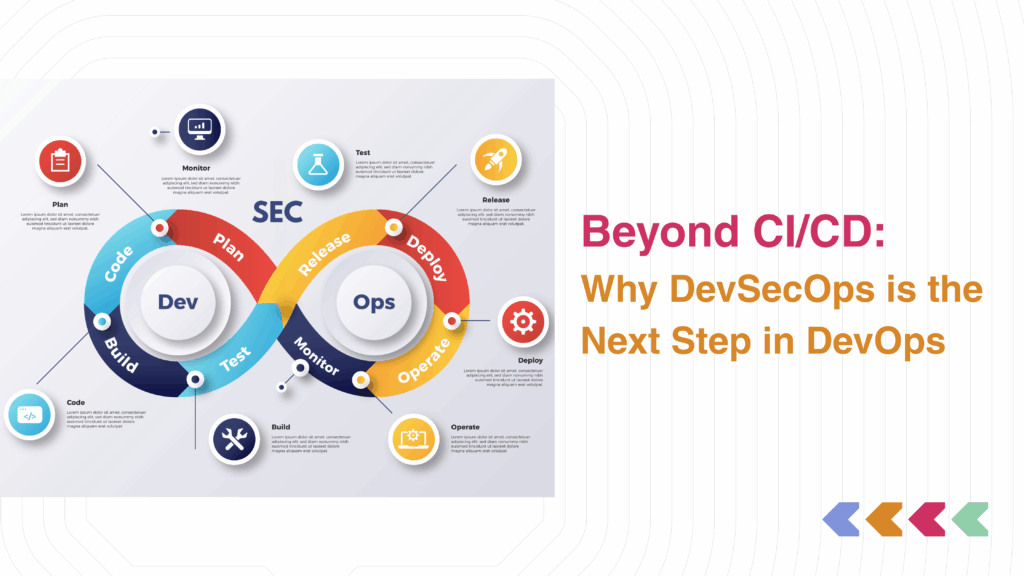
DevSecOps is the natural evolution of DevOps. It’s more than a set of tools—it’s a cultural shift. Security is integrated into every step of the development lifecycle, from coding to deployment.
- Shift-Left Approach: Security starts early, catching issues during development rather than after deployment.
- Shared Responsibility: Developers, operations, and security teams work together from day one.
- Continuous Protection: Security is automated and embedded into the CI/CD pipeline.
From DevOps to DevSecOps
DevOps revolutionized delivery with CI/CD pipelines:
- Continuous Integration (CI): Regularly merges and tests code changes.
- Continuous Delivery (CD): Automates deployments to production.
DevSecOps builds on this foundation by adding security checks throughout the pipeline. Fixing vulnerabilities during development can take minutes, but addressing the same issues after deployment can cost 30–100x more. Shifting security left reduces risk, prevents emergency fixes, and keeps releases smooth.
The Three Pillars of DevSecOps
- Culture: Security is everyone’s job, not just the security team’s. Collaboration starts on day one.
- Automation: Security tools are built into CI/CD—code scans, build validations, and deployment checks happen automatically.
- Governance: Automated compliance, configuration management, and visibility ensure standards are met without slowing development.
Key Practices in a DevSecOps Pipeline
A strong DevSecOps pipeline relies on continuous testing and monitoring:
- Static Application Security Testing (SAST): Detects vulnerabilities in code before it runs.
- Dynamic Application Security Testing (DAST): Tests running apps to simulate real-world attacks.
- Software Composition Analysis (SCA): Scans open-source dependencies for known threats.
- Container & Infrastructure Security: Secures Docker, Kubernetes, and Infrastructure as Code environments.
- Runtime Monitoring: Watches live applications for suspicious activity or new vulnerabilities.
“Catching security issues early is cheaper, faster, and safer.”
Business Benefits of DevSecOps
Implementing DevSecOps is more than a technical upgrade—it drives business value:
- Reduce Risk: Prevent security issues from reaching production.
- Maintain Speed: Automated checks keep fast delivery cycles intact.
- Ensure Compliance: Meet GDPR, ISO, and other standards automatically.
Save Costs: Early fixes avoid expensive emergency patches and delays.
Moving Forward with DevSecOps
You don’t need a full overhaul to get started with DevSecOps—just small, intentional changes that build momentum.
Here are the essentials:
- Build a security-first culture: Make security part of everyday conversations, not a final checkpoint.
- Automate early checks: Add code scans, dependency checks, and policy-as-code to catch issues sooner.
- Secure your environments: Use standardized, secure-by-default configurations and IaC practices.
- Monitor continuously: Treat runtime monitoring as your early-warning system.
“DevSecOps isn’t about slowing down—it’s about moving fast with confidence.”
By adopting these fundamentals, organizations create a pipeline that’s secure, resilient, and ready for continuous innovation.